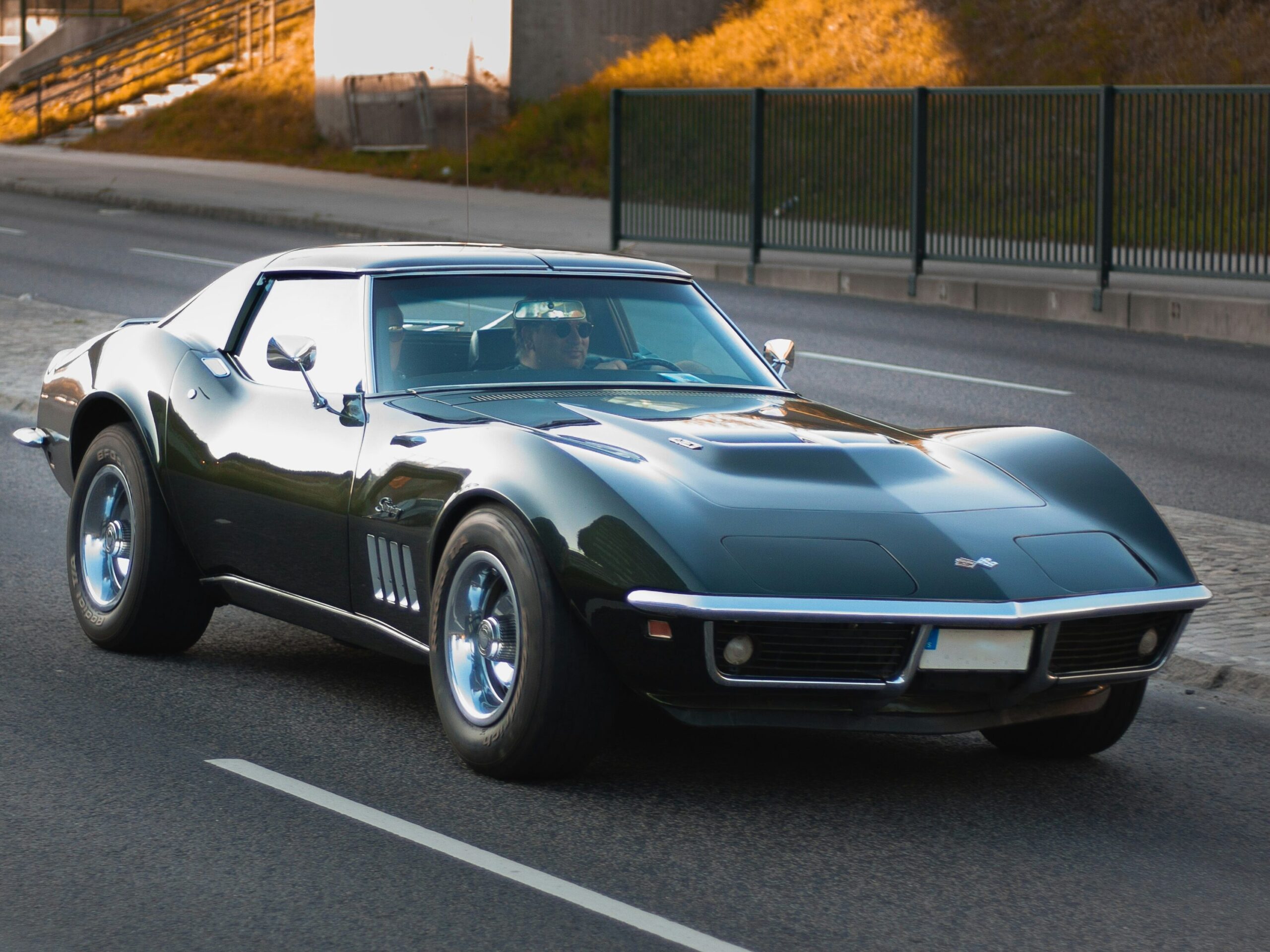
The Most Iconic Corvette Models of All Time

For more than 70 years, the Corvette has symbolized American performance, innovation, and bold design. Since its debut in 1953, Chevrolet’s sports car has constantly evolved — sometimes refining a winning formula, other times completely reinventing itself. Along the way, certain models rose above the rest. Some became legends because of their styling. Others earned respect through groundbreaking engineering or jaw-dropping performance numbers.

These are the Corvettes that didn’t just sell well or win races — they changed the trajectory of America’s sports car forever.

1963 Split-Window Sting Ray

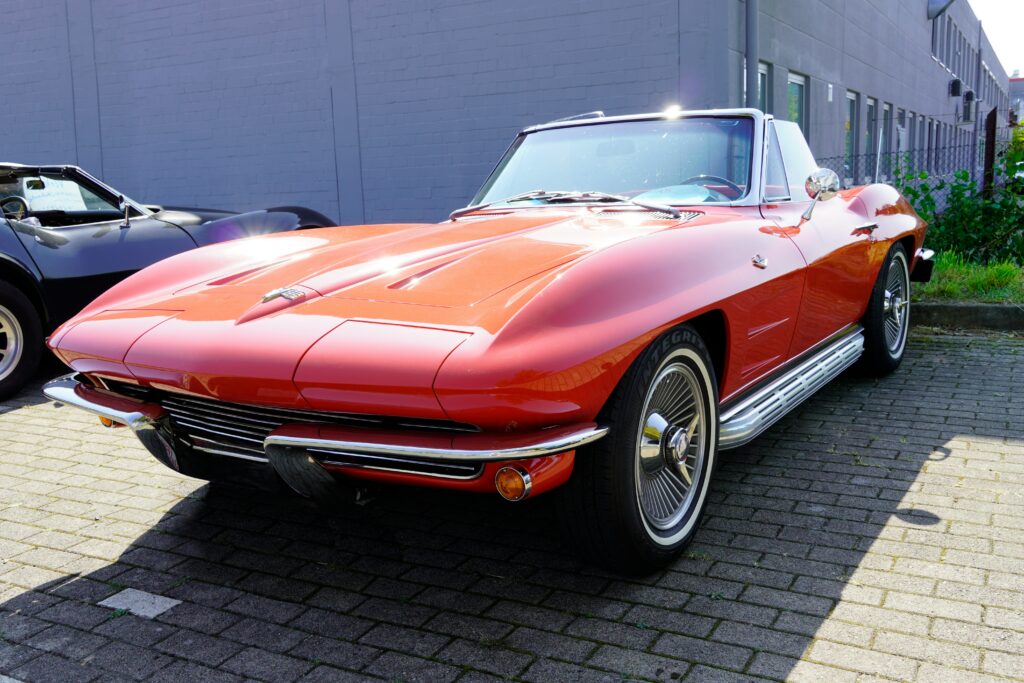
Few cars in automotive history are as instantly recognizable as the 1963 Split-Window Sting Ray. Officially part of the C2 generation, the 1963 Corvette coupe introduced one of the most dramatic design elements ever seen on a production sports car: a divided rear window separated by a central spine.

The split-window design was the vision of Corvette’s legendary chief stylist Bill Mitchell, who drew inspiration from racing prototypes. The result was stunning — futuristic, aggressive, and unmistakable. However, the divided rear glass created visibility concerns, and under pressure, Chevrolet eliminated it after just one model year. That one-year-only production instantly elevated the 1963 coupe into collector royalty.

But the 1963 model wasn’t just about styling. It also introduced a fully independent rear suspension — a major leap forward from the solid rear axle used in previous generations. This dramatically improved handling and ride quality, bringing the Corvette closer to European sports car standards.

Performance options ranged from small-block V8s to the fuel-injected 327 cubic-inch engine producing up to 360 horsepower — serious numbers for the early 1960s. Combined with its lightweight fiberglass body and improved chassis, the 1963 model wasn’t just beautiful — it was fast and capable.

Today, the 1963 Chevrolet Corvette Sting Ray remains one of the most valuable and admired Corvettes ever built. It represents the moment when the Corvette matured from stylish cruiser into a true performance machine.

1967 Big-Block Corvette

If the 1963 model introduced sophistication, the 1967 Corvette perfected the muscle-era formula. The final year of the C2 generation is widely regarded by enthusiasts as the pinnacle of classic Corvette design and engineering.

By 1967, Chevrolet had refined the Sting Ray’s styling into something clean, aggressive, and purposeful. Gone were the fender vents and excessive trim of earlier models. In their place was a streamlined, muscular silhouette that looked fast even when standing still.

Under the hood, things got serious. The available big-block V8 engines — including the legendary L71 427 cubic-inch engine — produced up to 435 horsepower (and likely much more in real-world output). With massive torque and straight-line acceleration that could embarrass almost anything on the road, the 1967 Corvette embodied the raw power of the American muscle era.

Yet it wasn’t just about brute force. The 1967 model year also offered upgraded suspension components, improved braking systems, and options like side-mounted exhaust pipes, which added both performance and visual drama.

The 1967 Chevrolet Corvette stands today as one of the most collectible Corvettes ever produced. Low production numbers and its status as the final and most refined C2 model make it a blue-chip classic in the collector car world.

For many, 1967 represents the ultimate expression of the classic front-engine, big-block Corvette formula.

1990 ZR-1 – “King of the Hill”

Fast forward to 1990, and the Corvette world was about to be shocked. The arrival of the ZR-1 marked a dramatic shift in philosophy. Rather than relying purely on displacement and muscle-car heritage, Chevrolet pursued advanced engineering and global performance credibility.

Nicknamed “King of the Hill,” the 1990 Chevrolet Corvette ZR-1 featured the revolutionary LT5 engine — a 5.7-liter V8 with dual overhead camshafts and 32 valves. Developed with assistance from Lotus, this high-tech powerplant produced 375 horsepower at launch, later increased to 405 horsepower.

For 1990, those numbers were staggering. The ZR-1 could exceed 175 mph, placing it firmly in European supercar territory. It wasn’t just quick in a straight line either — its upgraded suspension, wide rear tires, and performance-focused tuning gave it serious track capability.

Visually, the ZR-1 distinguished itself with a wider rear end and unique badging, but it retained the C4’s recognizable wedge shape. It was subtle compared to many supercars, yet brutally effective.

More importantly, the ZR-1 proved something critical: the Corvette could compete globally on technology and refinement, not just horsepower per dollar. It signaled that America’s sports car was no longer content playing in a domestic sandbox.

2009 ZR1 – Supercharged Supercar Slayer

Nearly two decades later, Chevrolet once again redefined expectations with the C6-generation ZR1 (note the slight name change from ZR-1 to ZR1). The 2009 Chevrolet Corvette ZR1 delivered 638 horsepower from its supercharged 6.2-liter LS9 V8 — making it the most powerful production Corvette ever built at the time.

This wasn’t just incremental progress. It was a full-scale assault on the supercar establishment.

With a top speed over 200 mph and Nürburgring lap times that rivaled European exotics costing twice as much, the 2009 ZR1 became a benchmark for performance value. Carbon fiber body panels, a transparent hood window showcasing the supercharger, magnetic ride control, and advanced aerodynamics demonstrated how far the Corvette had evolved.

Critics who once dismissed the Corvette as crude were forced to reconsider. The ZR1 offered world-class speed, composure, and track durability — without abandoning its American identity.

For many enthusiasts, the C6 ZR1 represents the ultimate expression of the front-engine Corvette platform before the revolutionary shift to mid-engine design.

C8 Z06 – A New Era of Performance

The introduction of the mid-engine C8 generation in 2020 fundamentally changed the Corvette’s layout and capabilities. But it was the Z06 variant that truly demonstrated how far the car had progressed.

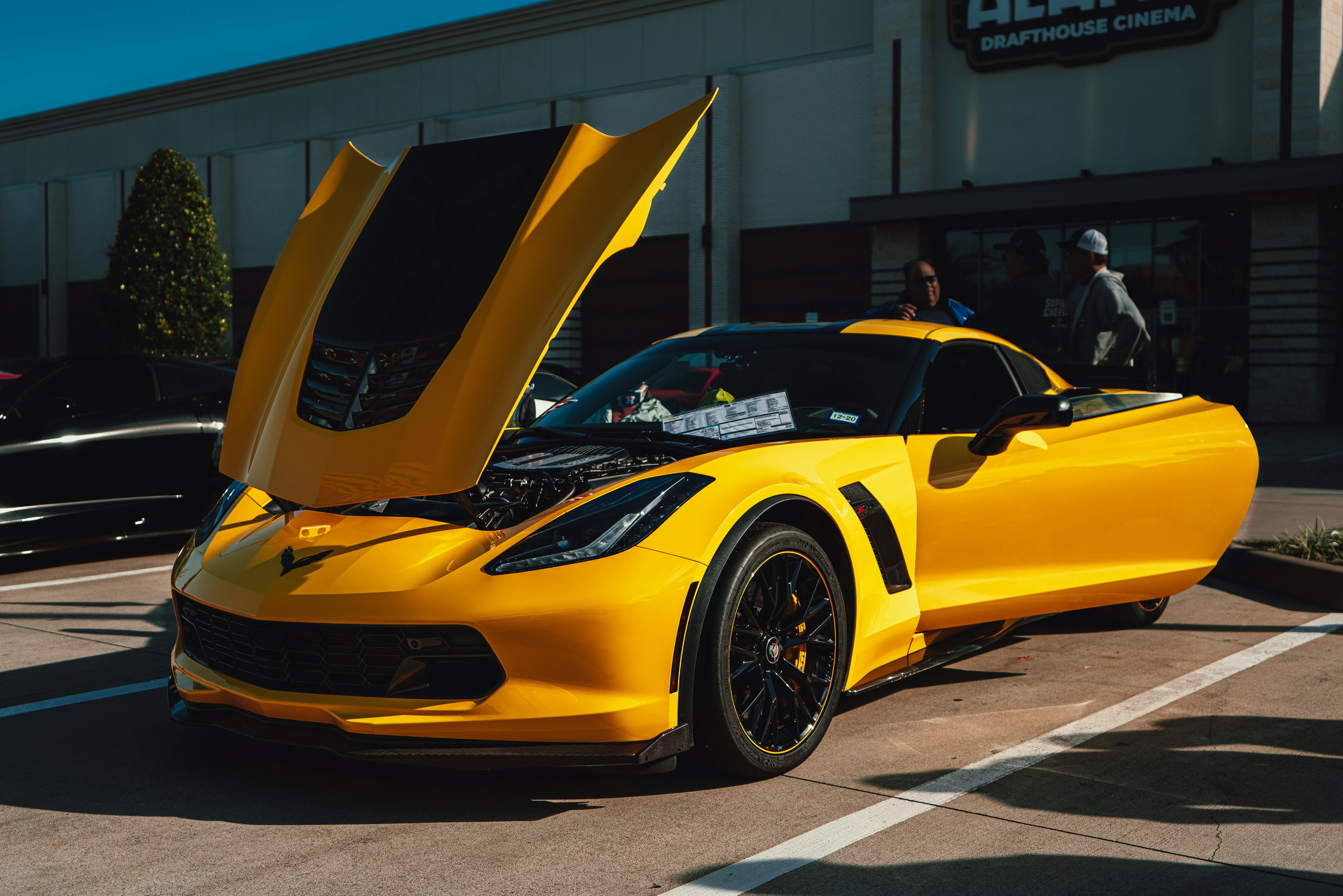
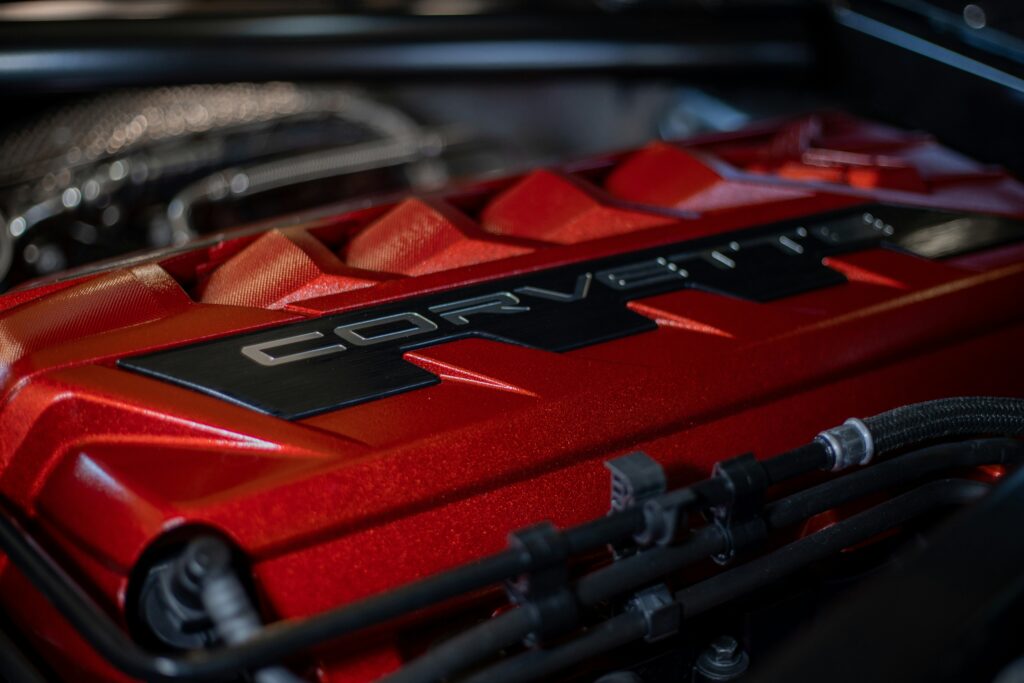
The Chevrolet Corvette Z06 features a naturally aspirated 5.5-liter flat-plane crank V8 — a configuration more commonly associated with exotic European brands. Revving beyond 8,000 RPM and producing over 650 horsepower, it delivers a sound and character unlike any Corvette before it.

The mid-engine layout dramatically improves weight distribution, traction, and cornering balance. Combined with aggressive aerodynamics, massive brakes, and track-focused suspension tuning, the C8 Z06 is engineered to dominate road courses.

This model represents a philosophical shift. Where earlier Corvettes often emphasized straight-line muscle, the C8 Z06 is precision-focused — designed from the ground up as a world-class track machine.

It proves that the Corvette is no longer just competing with European performance cars — it belongs in the same conversation.

Why These Models Matter

Each of these iconic Corvettes represents a turning point:

  • The 1963 Split-Window Sting Ray redefined design and chassis sophistication.
  • The 1967 Big-Block perfected the muscle-era formula.
  • The 1990 ZR-1 introduced advanced engineering and global ambition.
  • The 2009 ZR1 shattered performance ceilings for the front-engine platform.
  • The C8 Z06 ushered in a mid-engine supercar era.

They are prized not only for rarity or horsepower, but for what they symbolize. Each model pushed boundaries and forced the automotive world to pay attention.

The Corvette’s story is one of constant reinvention. It adapts to new technology, new performance standards, and new competitors — yet it never loses its core identity as America’s sports car.

That enduring ability to evolve is what keeps the Corvette relevant decade after decade.

It’s not just a car.
It’s a moving timeline of American performance history — and the legend is still being written.

C8 Corvette vs European Supercars: How America’s Sports Car Changed the Game

When Chevrolet unveiled the mid-engine C8 Corvette, it wasn’t just introducing a new generation of America’s sports car — it was signaling a seismic shift in the global performance landscape. For nearly 70 years, the Corvette had remained front-engine, rear-wheel drive. Meanwhile, the world’s most exotic and celebrated supercars from Europe had long embraced the mid-engine formula as the gold standard for balance and performance.

With the arrival of the C8, that changed overnight.

The C8 Corvette didn’t simply evolve — it redefined what American performance could be. And in doing so, it forced direct comparisons with European legends like the Ferrari and Lamborghini.

The Mid-Engine Advantage

For decades, mid-engine architecture has been associated with precision engineering and elite performance. By placing the engine behind the driver but ahead of the rear axle, weight distribution improves dramatically. This layout enhances balance, reduces understeer, sharpens turn-in response, and improves traction under acceleration.

European manufacturers mastered this formula years ago. Vehicles such as the Ferrari F8 Tributo and the Lamborghini Huracán rely on mid-engine layouts to deliver world-class cornering capability and razor-sharp handling.

When Chevrolet introduced the C8 Corvette, it adopted this same engineering philosophy. The move wasn’t cosmetic — it was transformative. Compared to previous front-engine Corvettes, the C8 delivers a lower center of gravity, improved weight balance, and significantly better traction when accelerating out of corners.

For Corvette enthusiasts, this was the realization of a dream that engineers had discussed for decades. For competitors, it was a warning shot.

Performance Numbers That Shocked the Industry

When the base C8 launched, it produced 495 horsepower with the Z51 performance package. That number alone is impressive — but the headline statistic was its 0–60 mph time of under three seconds.

That level of acceleration once required a six-figure European exotic. Cars wearing prancing horses or raging bulls had long dominated this performance bracket. Yet here was an American sports car delivering supercar acceleration at a fraction of the cost.

The price difference is what truly shook the industry. While many European supercars routinely begin north of $200,000 — and often climb well beyond that with options — the C8 entered the market at a starting price closer to that of a luxury sedan.

Performance per dollar became the Corvette’s strongest argument.

And it didn’t stop there. The introduction of the Chevrolet Corvette Z06 elevated the conversation even further. Featuring a flat-plane crank V8 and a screaming redline reminiscent of European exotics, the Z06 blurred the line between American muscle and Italian thoroughbred. Suddenly, the Corvette wasn’t just matching European supercars in acceleration — it was challenging them in character and sound.

Interior and Technology: Closing the Gap

Historically, one of the most common criticisms of Corvettes involved interior quality. While performance was often exceptional, critics argued that European rivals offered more refined cabins, higher-end materials, and superior craftsmanship.

The C8 changed that narrative in dramatic fashion.

The cockpit is unapologetically driver-focused, with a dramatic center console that wraps around the pilot. Digital displays replace analog gauges, offering customizable performance data and track telemetry. Premium materials, stitched leather, and carbon fiber accents create an atmosphere that feels far more upscale than Corvettes of the past.

The shift to an 8-speed dual-clutch transmission marked another major evolution. Previous generations offered manual gearboxes, beloved by purists. But to compete directly with European exotics, Chevrolet opted for lightning-fast, computer-controlled shifts. The result is seamless acceleration comparable to the transmissions found in high-end European supercars.

While luxury purists may still argue that certain European brands maintain a slight edge in tactile refinement or brand prestige, the gap has narrowed dramatically — far more than many expected.

Track Capability and Engineering Depth

Straight-line speed is only one measure of a supercar. Sustained performance on a road course is where engineering truly shines.

Chevrolet’s performance team focused intensely on aerodynamics, cooling systems, and chassis rigidity when developing the C8. The mid-engine layout allowed for improved airflow management and enhanced structural stiffness. Larger brakes and advanced suspension geometry enable confident, repeatable performance during track sessions.

Independent testing has shown that the C8 can lap alongside — and in some cases outperform — significantly more expensive European competitors. That reality would have been nearly unthinkable just a decade ago.

The Corvette has always delivered impressive speed. What makes the C8 different is its composure. It feels planted, predictable, and precise — traits traditionally associated with Europe’s elite performance brands.

The Psychological Shift

Perhaps the C8’s greatest impact isn’t measured in horsepower or lap times — it’s measured in perception.

For decades, American sports cars were viewed as brute-force machines: massive engines, straight-line dominance, and aggressive styling. European supercars, by contrast, were seen as refined instruments of precision engineering.

The C8 disrupted that stereotype.

Its sharp, angular design looks more like an Italian exotic than a traditional American muscle car. Its mid-engine proportions fundamentally changed how people perceive the Corvette silhouette. Parked next to European exotics, the C8 no longer appears out of place — it looks like it belongs.

This shift matters because perception shapes the market. Buyers who may never have considered an American sports car are now taking a second look.

Value vs Prestige

Does the C8 Corvette replace a Ferrari or Lamborghini in terms of heritage and exclusivity? That depends on what a buyer prioritizes.

European supercars carry decades of racing pedigree, limited production numbers, and brand cachet that extends beyond raw performance. Ownership often includes an element of status and exclusivity that transcends numbers on a spec sheet.

The Corvette, however, has always championed accessibility. It delivers extraordinary performance without requiring generational wealth. That philosophy remains intact with the C8 — but now it does so with engineering sophistication that rivals global elites.

In measurable categories — acceleration, braking, handling, technology, and price-to-performance ratio — the C8 is not merely competitive. It is disruptive.

The Game Has Changed

The introduction of the mid-engine C8 Corvette represents one of the boldest decisions in American automotive history. Chevrolet could have continued refining the traditional front-engine formula. Instead, it reinvented its flagship sports car entirely.

In doing so, it elevated the Corvette into a new class.

The C8 didn’t just join the supercar conversation — it forced it to evolve. European manufacturers now face a competitor that delivers comparable performance at a dramatically lower cost. The ripple effect is already visible in the performance market.

America’s sports car is no longer defined by compromise or caveat. The C8 Corvette stands as proof that world-class engineering knows no geographic boundary.

And for the first time, when discussing the world’s great supercars, leaving Corvette out of the conversation simply isn’t an option anymore.

The Evolution of the Chevrolet Corvette: From 1953 to the Mid-Engine Revolution

Few vehicles in American automotive history carry the prestige, heritage, and performance reputation of the Chevrolet Corvette. For more than seven decades, the Corvette has stood as a symbol of innovation, speed, and bold American design. It has weathered economic downturns, oil crises, emissions crackdowns, and fierce global competition — yet it continues to thrive. From its fiberglass-bodied beginnings in 1953 to today’s mid-engine supercar configuration, the Corvette has constantly reinvented itself while staying true to its identity as America’s sports car.

The Birth of an American Icon (C1: 1953–1962)

The Corvette story began in 1953 when it debuted at the General Motors Motorama show in New York City. At the time, American automakers were noticing the popularity of lightweight European sports cars returning from World War II. Chevrolet wanted to build something similar — but distinctly American.

The first-generation Corvette, now known as the C1, featured a revolutionary fiberglass body. This was a bold move in an era when steel dominated automotive manufacturing. Fiberglass allowed for lighter weight and more sculpted styling, setting the Corvette apart immediately.

However, early performance did not match the car’s sporty looks. The 1953 Corvette came equipped with a modest inline-six engine paired to a two-speed automatic transmission. It looked fast, but it wasn’t yet a true performance contender.

Everything changed in 1955 when Chevrolet introduced the small-block V8 engine. This addition transformed the Corvette from a stylish cruiser into a legitimate sports car. Horsepower increased dramatically, acceleration improved, and enthusiasts began taking the Corvette seriously. By the late 1950s, the Corvette had earned a growing reputation for performance, especially with the introduction of fuel injection in 1957 — a cutting-edge feature at the time.

The foundation was set. The Corvette was no longer just an experiment. It was becoming a performance icon.

Sting Ray Era and Muscle Power (C2 & C3: 1963–1982)

In 1963, Chevrolet introduced what many consider the most beautiful Corvette ever built: the second-generation C2 Sting Ray. The design was sharp, aggressive, and futuristic. Hidden headlights, sculpted fenders, and the now-legendary split rear window coupe (available only in 1963) made it an instant classic.

Under the hood, the horsepower wars were escalating. Big-block V8 engines pushed output beyond 400 horsepower, turning the Corvette into a true American muscle machine. During the height of the muscle car era, the Corvette stood at the top of Chevrolet’s performance hierarchy.

The third-generation C3 debuted in 1968, heavily inspired by the Mako Shark II concept car. Its flowing curves and dramatic body lines defined the Corvette look throughout the 1970s. Sales were strong, and the Corvette became a cultural symbol of American performance and style.

However, the 1970s brought challenges. Stricter emissions regulations and the oil crisis led to significant horsepower reductions across the automotive industry. Corvette performance dipped during this period, but its image endured. Even when power numbers fell, the Corvette remained aspirational — a car people dreamed of owning.

Modern Performance Takes Shape (C4–C6: 1984–2013)

After skipping the 1983 model year entirely, Chevrolet launched the C4 Corvette in 1984. This generation marked a major technological leap forward. The C4 featured a completely redesigned chassis, improved aerodynamics, and advanced suspension systems that prioritized handling precision.

Inside, digital dashboards and modernized interiors signaled that the Corvette was stepping into a new era. Performance steadily improved throughout the C4’s lifespan, culminating in high-performance variants like the ZR-1, which reestablished the Corvette as a serious global competitor.

The fifth-generation C5 (1997–2004) represented another transformative leap. It introduced the LS engine family — powerplants that would become legendary for their durability, efficiency, and tuning potential. The C5 also featured a rear-mounted transaxle, improving weight distribution and balance. This engineering refinement significantly enhanced handling and made the Corvette more competitive against European sports cars.

Then came the C6 (2005–2013), which refined the formula further. Pop-up headlights were retired, weight was reduced, and performance increased. High-performance models like the Z06 and the supercharged ZR1 delivered astonishing speed at a price far lower than comparable European supercars. By this point, the Corvette wasn’t just competing — it was outperforming many of its rivals in value and raw capability.

The Front-Engine Finale (C7: 2014–2019)

The seventh-generation C7 Corvette marked the end of the traditional front-engine era. Aggressive styling, sharp creases, and a driver-focused cockpit gave it a modern, purposeful look. Under the hood, the LT1 V8 delivered strong naturally aspirated performance, while higher trims like the Z06 and ZR1 pushed output beyond 650 horsepower.

The C7 combined brute strength with sophisticated handling. Magnetic ride control, advanced aerodynamics, and performance data recorders reflected how far technology had advanced since 1953.

By this stage, the Corvette had evolved into a world-class performance machine. It was no longer just America’s sports car — it was a legitimate global contender capable of standing toe-to-toe with vehicles costing twice as much.

Yet Chevrolet engineers had long dreamed of going even further.

The Mid-Engine Revolution (C8: 2020–Present)

In 2020, Chevrolet stunned the automotive world by unveiling the first-ever mid-engine Corvette: the C8. For decades, Corvette engineers had experimented with mid-engine concepts dating back to the 1960s. Moving the engine behind the driver promised better weight distribution, improved traction, and enhanced handling balance.

The C8 finally made that dream a production reality.

Visually, the transformation was dramatic. The proportions shifted, the nose shortened, and the cabin moved forward. The Corvette suddenly looked like an exotic European supercar. But unlike many mid-engine competitors, it maintained a starting price that remained relatively accessible compared to six-figure exotics.

Performance matched the bold design. The mid-engine layout improved acceleration and cornering stability. Later variants pushed the envelope even further, solidifying the Corvette’s place in supercar territory.

The C8 was not simply a redesign — it was the culmination of nearly 70 years of engineering ambition. It proved that even icons are willing to reinvent themselves.

Why the Corvette Still Matters

The Corvette’s survival is no accident. It has endured because it adapts. When emissions regulations tightened, it evolved. When technology advanced, it embraced innovation. When global competition intensified, it stepped up its game.

Perhaps most importantly, the Corvette has consistently delivered exceptional performance per dollar. While many sports cars drift into ultra-luxury pricing, the Corvette has remained aspirational yet attainable. That balance has kept it relevant across generations.

Each iteration reflects the era in which it was built — from the optimism of the 1950s to the muscle car bravado of the 1960s, the challenges of the 1970s, the technological leap of the 1980s and 1990s, and today’s high-tech supercar landscape.

From fiberglass beginnings to mid-engine precision, the evolution of the Corvette proves one thing: true icons don’t stand still. They evolve — and in doing so, they define the future while honoring the past.